
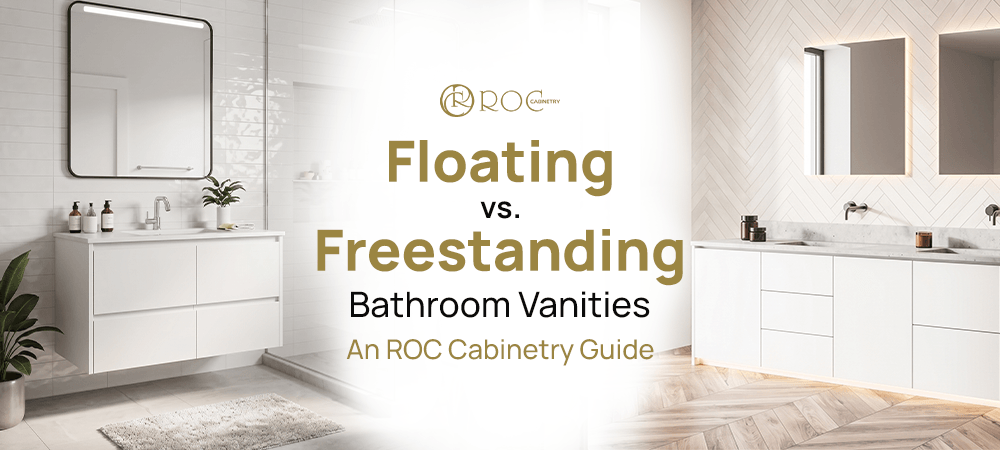
Floating vs. Freestanding Bathroom Vanities: An ROC Cabinetry Guide
Blog Summary:
The choice between floating and freestanding bathroom vanities comes down to function vs. Form in 2026. Floating vanities are:
- Wall-mounted
- Modern
- Ideal for making small bathrooms feel larger
However, they:
- Sacrifice storage
- Require more complex installation
Freestanding vanities:
- Sit on the floor
- Offer maximum storage
- Easier to install
This makes them better suited for:
- Family bathrooms
- High-traffic bathrooms
Homeowners increasingly balance high-end design with daily functionality when making bathroom remodeling decisions. The choice often comes down to freestanding vanities and floating bathroom vanities. This guide helps homeowners, designers, and dealers pick the right option.
Understanding Floating Bathroom Vanities
A floating vanity is a wall-mounted unit that doesn’t touch the floor. Because the cabinet hangs, it creates open floor space and provides a minimalist, sleek appearance.
One of its key features is adjustable height. This allows for a custom fit based on the user’s ergonomics. Exposing more of the floor, it creates a powerful visual illusion of a larger room.
Understanding Freestanding Bathroom Vanities
A freestanding vanity is a floor-mounted, cabinet-style unit that rests directly on the ground or on decorative legs. These units offer full-base storage, using all available space from the floor to the counter.
Key Differences at a Glance
Feature | Floating Vanity | Freestanding Vanity |
Mounting | Wall-mounted | Floor-mounted |
Storage Capacity | Limited (no base storage) | Maximum (full cabinetry) |
Ease of Cleaning | High (easy to mop underneath) | Moderate (corners/base) |
Installation | Complex (requires wall support) | Simple/Standard |
Visual Impact | Open, modern, airy | Traditional, sturdy, classic |
Pros and Cons of Floating vs. Freestanding
Vanity Type | Pros | Cons |
Floating | • Space Improvement: Makes small rooms feel larger. • Maintenance: Effortless floor cleaning. • Ergonomics: Customizable mounting height. • Luxury Appeal: Modern, high-end look. | • Complex Installation: Requires structural wall reinforcement. • Storage Trade-off: Less capacity than floor models. • Plumbing: Often requires wall rerouting. |
Freestanding | • Storage Powerhouse: Maximum organization. • Installation Ease: Fast setup or replacement. • Style Versatility: Fits any decor. • Plumbing: Conceals pipework within the base. | • Floor Footprint: Can make small bathrooms feel cramped. • Cleaning Challenges: Dust/moisture buildup around the base. |
Which Style Is Leading the Way?
A surge in minimalist, spa-like bathroom layouts is driving floating vanity sales. Homeowners are increasingly looking for airy designs that prioritize style. However, freestanding vanities remain the dominant choice for functional primary bathrooms.
Buyer Guide: How to Pick
To pick the right bathroom vanity, consider several factors. Small spaces and powder rooms typically favor floating designs, while larger bathrooms offer the flexibility for either style. If storage for bulk items or linens is a priority, or working within a strict budget, a freestanding model is the better choice.
Design-wise, floating vanities complement modern and minimalist looks, whereas freestanding units suit classic or transitional styles. Finally, check your plumbing. If pipes are already floor-mounted, a freestanding vanity provides the easiest installation.
Best Use Cases
Floating vanities are ideal for powder rooms, luxury modern homes, and small bathrooms where maximizing floor space is a priority. In contrast, freestanding vanities are best suited for high-traffic family bathrooms, projects that require maximum storage, or quick remodel updates.
Final Takeaways
The right bathroom vanity depends on your priorities. Always pick based on function first, then let the style follow. Explore ROC Cabinetry cabinets today!
FAQs
- 1. Which is better,floatingor freestanding bathroom vanities in 2026?
Neither is objectively better. Floating vanities are better for modern design and small spaces, while freestanding vanities are better for storage, durability, and ease of installation.
- 2. Are floating vanities strong enough to hold heavy use?
Yes, when properly installed into wall studs with reinforcement. However, they require professional installation and correct structural support.
- 3. Dofloating bathroom vanitiescost more than freestanding?
Typically, yes, floating vanities often increase costs because of added labor, wall reinforcement, and potential plumbing modifications.
- 4. Dofloating bathroom vanitiesmake small bathrooms appear larger?
Yes, because the floor remains visible underneath, floating vanities create a more open visual space.
- 5. Which bathroom vanity offers more storage space?
Freestanding bathroom vanities. They use the full floor-to-counter footprint, allowing for deeper drawers, cabinets, and higher storage capacity.
- 6. Are freestanding bathroom vanities outdated in 2026?
No, while floating vanities are trending, freestanding styles remain widely used.
- 7. Which is easier to install during a remodel?
Freestanding vanities are significantly easier to install. Floating vanities require wall anchoring, reinforcement, and often plumbing adjustments.
- 8. Which vanity is better for small bathrooms or powder rooms?
Floating vanities are usually the better choice because they save visual space and improve flow in compact layouts.