Inset Cabinets vs. Shaker Cabinets: Which Style Is Right for Each Project?
Quick Summary
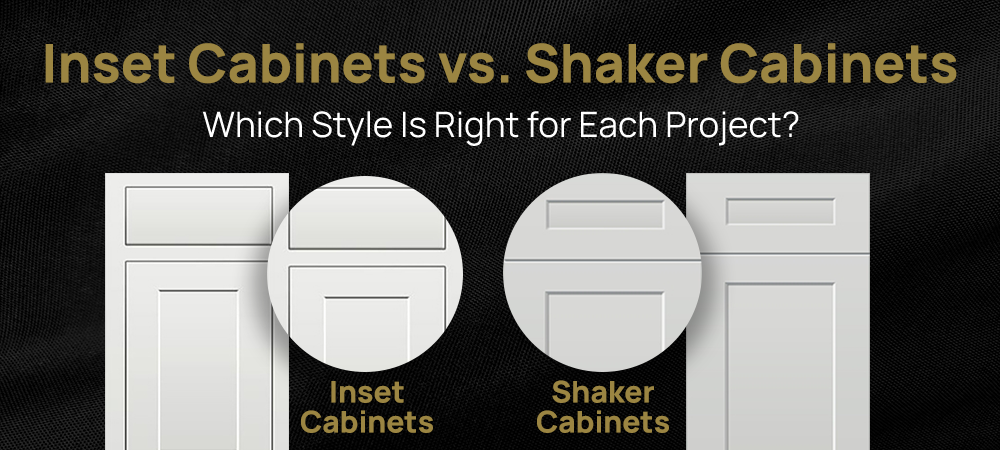
Inset cabinets describe construction: doors sit flush inside the cabinet frame.
Shaker cabinets describe door style: a simple five-piece design.
You can combine both with inset Shaker cabinets.
Inset cabinets cost more because of their precision:
Manufacturing
Craftsmanship
Installation
Door and drawer alignment
Shaker cabinets offer:
Versatility
Easier maintenance
Excellent value
The right choice depends on your:
Budget
Design preferences
Installation needs
Long-term goals
The cabinet style you select influences the overall look, installation process, project budget, and long-term functionality of a kitchen. One common comparisons homeowners make is between Inset cabinets and Shaker cabinets.
Manufacturers define inset by how they construct and install a cabinet door. While Shaker describes the design of the cabinet door itself. You can combine both features into a single cabinet because they define different aspects of cabinetry.
We’ll explore the differences between inset and Shaker cabinets, discuss maintenance and cost considerations, and explain how experienced dealers can help customers pick the best option.
What Are Inset Cabinets?
Inset cabinets are defined by their construction. Instead of sitting on top of the cabinet frame, the doors and drawer fronts sit inside the frame opening, creating a perfectly flush appearance.
This traditional cabinet construction requires exceptional manufacturing precision because every door must fit within the opening with consistent spacing on all sides.
Key characteristics of inset cabinets include:
Doors and drawer fronts that sit inside the face frame
Narrow, consistent reveals around each door
A flush, furniture-style appearance
Premium craftsmanship
Precision manufacturing and installation
The quality of inset cabinets depends heavily on manufacturing consistency, accurate machining, durable hardware, and precise installation.
Pros of Inset Cabinets
Inset cabinets are widely recognized for their exceptional craftsmanship attention to detail, and upscale appearance. Because the doors fit inside the cabinet frame, inset cabinetry creates a clean, refined look that many homeowners associate with custom furniture.
Key benefits include:
A high-end, custom appearance
Refined door and drawer alignment
Strong visual detail
A furniture-inspired look
Strong fit for luxury and custom kitchen projects
However, this premium appearance depends on precise manufacturing tolerances. Cabinet boxes, doors, hinges, and installation all must work together perfectly to maintain consistent reveals throughout the kitchen.
For custom homes and high-end remodeling projects, inset cabinetry often becomes a defining design feature.
CTA – Shop Inset Series
What Are Shaker Cabinets?
Shaker cabinets refer to the design of the cabinet door, not the cabinet's construction method. A Shaker door typically features five-piece construction, a flat recessed center panel, square edges, minimal decorative detail, and clean, timeless lines.
A cabinet can be both an inset and Shaker . One describes the construction while the other describes the door style. Many homeowners are surprised to learn that one of today’s most popular combinations is the Inset Shaker cabinet. It pairs premium cabinet construction with the clean lines of a Shaker door.
Advantages of Shaker Cabinets
Shaker cabinets have remained one of the industry’s most popular cabinet styles for decades because they offer:
Timeless design
Broad versatility
Easy-to-clean panels
Wide finish availability
Strong value across many project types
Shaker cabinets complement many kitchen aesthetics, including modern, farmhouse, transitional, traditional, and Scandinavian-inspired designs. They are also a practical option for builder, multi-family, and rental projects because of their broad appeal and installation efficiency.
Shaker doors adapt easily as design trends evolve because the simple profile works well across a wide range of colors, finishes, and hardware styles.
CTA – Shop Shaker Series
Inset Cabinets vs. Shaker Cabinets: Understanding the Difference
Feature | Inset Cabinets | Shaker Cabinets |
Definition | Cabinet construction method | Cabinet door design |
Door Style | Can be made with different door profiles, including Shaker | Five-piece flat-panel design |
Construction | Doors and drawer fronts sit inside the frame opening | Can use multiple construction types |
Appearance | Flush, refined, furniture-style look | Clean, simple, timeless |
Manufacturing | Requires high precision and tight tolerances | Varies by cabinet line and construction type |
Cost | Generally higher | Available across many price points |
Installation | Requires greater precision | Easier installation in many applications |
Maintenance | May require hinge adjustments | Typically, straightforward to maintain |
Popular Applications | Luxury, custom, and high-end residential kitchens | Residential, builder, remodel, rental, and multi-family projects |
Durability | Excellent with proper installation | Excellent across construction types |
The Cost of Inset Cabinets
Manufacturers position inset cabinets as a premium cabinetry option because they require additional craftsmanship during manufacturing and installation. Several factors can increase the cost, including greater manufacturing accuracy, additional labor, tighter tolerances, and more detailed quality control.
Small variations in cabinet dimensions can affect how inset doors align. For this reason, dealers often recommend inset cabinetry for luxury homes and custom kitchen projects.
For budget-sensitive, high-volume, or fast-turnaround projects, Shaker cabinets may be a more practical option because they offer broad appeal with simpler installation requirements.
Which Cabinet Style Requires Less Upkeep?
Inset Cabinets
Inset cabinets feature narrow gaps around each door that contribute to their signature appearance. Over time, homeowners may need occasional hinge adjustments, periodic door alignment, cleaning around door reveals, and routine hardware maintenance.
Shaker Cabinets
Shaker cabinets are known for straightforward maintenance. Their flat center panels, minimal decorative grooves, and simple profile make them easier to clean than many highly detailed cabinet door styles. With proper care, both inset and Shaker cabinetry can provide long-term performance.
Matching Styles to Kitchen Designs
Traditional Kitchens
Inset cabinetry complements traditional architecture and classic millwork. The furniture-inspired appearance creates an elegant, handcrafted aesthetic.
Farmhouse Kitchens
Shaker cabinets are often a strong choice for farmhouse kitchens thanks to their clean lines and understated design. White, warm wood, and painted finishes continue to be especially popular options.
Contemporary Kitchens
Modern kitchens often favor Shaker cabinets. Their simple geometry pairs well with minimalist hardware, sleek countertops, and clean architectural lines.
For very modern or European-inspired projects, customers may also consider slab or Euro-style cabinetry.
Luxury Homes
Luxury residences frequently incorporate inset cabinetry to emphasize craftsmanship and elevate the overall design.
Multi-Family Projects
For apartments, condos, and rental developments, Shaker cabinets provide an excellent balance of durability, style, and installation efficiency.
Builder Projects
Production builders commonly select Shaker cabinetry because it offers broad consumer appeal, simplified installation, and flexibility across multiple finish options.
Can You Combine Inset and Shaker?
Yes. This is one of the most common misconceptions surrounding cabinet terminology. Inset describes the cabinet construction, while Shaker describes the cabinet door style. That means many kitchens feature inset Shaker cabinets, combining flush inset construction with timeless shaker door design.
How Dealers Can Help Customers Choose
Cabinet dealers play an important role in helping customers navigate these options. Rather than recommending a style immediately, experienced dealers should consider questions such as:
1.What is your project budget?
2. Which kitchen design style does the customer prefer?
3. What is the construction timeline?
4. How large is the kitchen?
5. How much maintenance is the customer comfortable with?
6. Does the project require a premium furniture-style look or a more practical value-focused option?
7. Is the installer experienced with inset cabinetry?
Why Cabinet Quality Matters
When comparing cabinet options, look for durable cabinet box construction, accurate door alignment, quality hardware, consistent finishes, and reliable material selection. These details affect how the cabinets look, function, and perform over time.
ROC Cabinetry offers cabinet collections designed to support a wide range of projects, from builder and multi-family applications to upgraded residential kitchens and premium inset designs.
Final Takeaways
Neither inset nor shaker cabinets are universally better. The right choice depends on the project’s budget, design goals, installation requirements, and long-term expectations.
Explore ROC Cabinetry’s cabinet collections today!
FAQs
1.Are inset cabinets the same as Shaker cabinets?
No, inset describes the cabinet construction, while Shaker refers to the cabinet door style.
2. Can you get Shaker cabinets with an inset design?
Yes, many kitchens feature inset Shaker cabinets that combine flush construction with a classic Shaker door design.
3. Why do inset cabinets cost more?
Inset cabinets require greater manufacturing precision, more labor, additional installation accuracy, and tighter quality control.
4. Which cabinet style is more durable?
Both inset and Shaker cabinets are highly durable when manufactured with quality materials and installed correctly.
5. Are inset cabinets suitable for modern kitchens?
Yes, while traditionally associated with classic designs, inset cabinetry can also create sophisticated contemporary kitchens.
6. Which cabinet style is best for builders and dealers?
Builders and developers often choose Shaker cabinets for multi-family projects because they offer broad consumer appeal, design versatility, and installation efficiency.
7. Are inset cabinets harder to install?
Inset cabinets typically require more precise installation because the doors and drawer fronts sit inside the frame opening. Accurate alignment is important to maintain even reveals throughout the cabinet layout.
8. Are Shaker cabinets only for traditional kitchens?
No. Shaker cabinets can work in traditional, farmhouse, transitional, modern, builder-grade, and multi-family projects because of their clean and versatile door profile.