Slim Shaker & Accent Colors: How to Style Jade Green and Wood Grain Cabinets
Kitchen cabinets no longer have to match from wall to wall. More homeowners are mixing cabinet finishes to give the kitchen a little more character while keeping the overall design cohesive.
One combination that makes this possible is a slim Shaker door paired with a distinctive color and a natural wood finish. Instead of relying on elaborate door details, the design gets its interest from the relationship between color, texture, and the surrounding materials.
Jade Green is a good example. It has enough depth to stand out, but it can still work with neutral countertops, natural materials, and warm metal finishes. Wood grain brings another dimension to the room, adding variation that a painted finish doesn't have.
ROC Cabinetry's Newtown Series offers a practical starting point for this look. The collection uses a Slim Shaker door profile with 0.60-inch stiles and rails and includes both Newtown Jade Green and Newtown Cotton Oak.
Here's how to bring those elements together without making the kitchen feel overly busy.
Start With the Cabinet Door Profile
Before choosing colors, it helps to consider the shape of the cabinet door itself.
Traditional Shaker cabinetry is known for its recessed center panel and straightforward frame. Slim Shaker keeps that familiar layout but uses narrower rails and stiles, giving the door a lighter visual presence.
That difference can be useful when introducing a stronger cabinet color. A simpler door profile gives the finish more room to speak for itself instead of competing with decorative details.
The Newtown Series follows this slimmer approach. Its 0.60-inch rails and stiles create a clean, narrow profile that can fit comfortably into contemporary and transitional kitchens.
ROC Cabinetry also previously introduced the collection in its article Newtown Slim Shaker Cabinets Series Lineup. That earlier article is useful for readers who want more background on the original Newtown lineup and its different finishes.
Let Jade Green Be the Color Moment
Green has become a popular alternative to the more familiar white, gray, and blue cabinet palettes. Jade Green takes the idea a step further without becoming an especially bright or demanding color.
The advantage of using it in cabinetry is that it can change the character of a kitchen without requiring a complete redesign of the room.
With Newtown Jade Green, the color is paired with the collection's narrow Shaker profile. ROC Cabinetry lists Jade Green as one of the painted finishes in the Newtown Series.
There are several ways to introduce it.
A homeowner who wants a stronger look might use Jade Green throughout the main cabinetry. Someone who prefers a quieter kitchen could reserve it for an island or a section of lower cabinets.
The amount of green matters just as much as the color itself.
Use Wood Grain to Add a Different Kind of Texture
Painted cabinets create a consistent surface. Wood does something different.
Natural wood introduces changes in grain, tone, and texture, which can make a kitchen feel less uniform. That's one reason wood finishes work well alongside painted cabinets.
In the Newtown collection, Cotton Oak is the natural wood option, using a white oak veneer. ROC Cabinetry notes that natural characteristics such as grain variation, color variation, and sapwood or heartwood combinations can occur with this finish.
That variation is part of what gives wood its character.
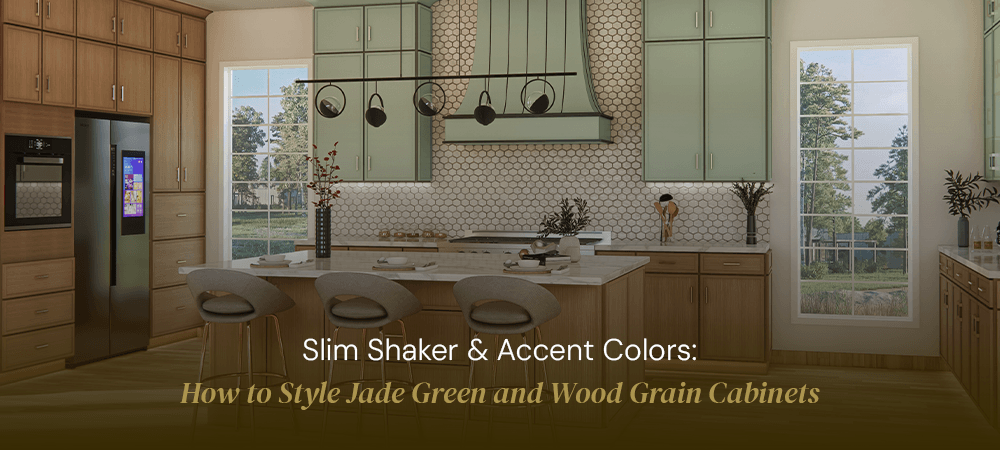
When paired with Jade Green, Cotton Oak can be used to break up a large run of painted cabinetry or create a focal point without introducing another cabinet style.
Three Ways to Combine Jade Green and Wood
There isn't one formula for combining the two finishes. The best arrangement depends on the size of the kitchen and how much contrast the homeowner wants.
Jade Green Cabinets With a Wood Island
Use Jade Green for the perimeter cabinets and introduce wood on the island.
This gives the kitchen a clear center point while keeping the main cabinet layout consistent. The island can also pick up other wood elements in the room, such as stools or open shelving.
This option works especially well when the perimeter cabinets need to feel visually continuous.
Wood Cabinets With a Jade Green Island
Reversing the arrangement creates a different effect.
Cotton Oak can establish a warmer overall backdrop, while the Jade Green island becomes the feature that draws attention toward the center of the kitchen.
This can be a good choice for homeowners who like color but don't want it to dominate the entire room.
A Smaller Green Accent
Jade Green doesn't have to be limited to the island.
A small section of cabinetry, a beverage station, or a specific work area can provide just enough color to distinguish the kitchen without changing the entire cabinet layout.
This is particularly useful in open-plan spaces where the kitchen already shares visual space with a dining or living area.
Think About the Countertop as the Middle Ground
When two cabinet finishes are involved, the countertop sits between them and can help connect the overall palette.
A bright white countertop creates a noticeable separation between Jade Green and wood. Warm white and cream surfaces make the transition softer.
If the Cotton Oak grain is prominent, a countertop with subtle movement may be easier to coordinate than a heavily patterned surface.
For a more contemporary kitchen, a simple light-colored countertop can keep the cabinetry as the main feature.
For a warmer transitional design, cream, beige, or light taupe tones can work with the natural character of the wood.
The important thing is to avoid adding too many competing patterns. If the cabinets already supply color and grain, the countertop doesn't need to do all the visual work too.
Choose Hardware Based on the Overall Style
Hardware is one of the easiest elements to change, which makes it a useful way to steer the look in a particular direction.
For a Warmer Look
Brass and champagne bronze can bring warmth to Jade Green cabinets. They also work naturally with wood tones and can give the kitchen a softer transitional feel.
For a Modern Look
Matte black creates a sharper contrast against green and wood. It can reinforce a more contemporary appearance, particularly when paired with simple lighting and minimal decorative details.
For a Quieter Look
Brushed nickel or another understated metal allows the cabinet finishes to remain the focus.
There is no need for every metal in the kitchen to be identical, but keeping the main finishes coordinated will help the room feel intentional.
Keep the Backsplash From Competing With the Cabinets
A kitchen with two cabinet finishes already has plenty of visual interest.
For that reason, the backsplash can take a supporting role.
A simple white tile can brighten the space. A warm neutral tile can connect the cabinetry with the countertop. Larger-format tile can provide a cleaner appearance if the goal is a more modern kitchen.
The choice should also take the countertop into account. If the countertop has noticeable veining, using a quieter backsplash can prevent the surfaces from competing with each other.
On the other hand, if the countertop is very simple, the backsplash can introduce a little more texture.
Use Lighting to Check the Colors
Painted green and natural wood don't always look exactly the same throughout the day.
Natural light can make Jade Green appear different in the morning than it does under evening lighting. Wood veneer can also show changes in tone depending on the surrounding light.
This is why cabinet samples are worth viewing before making a final decision.
Place the samples near the countertop, backsplash, flooring, and wall color rather than looking at each material separately. Seeing everything together gives a much better idea of how the finished kitchen will feel.
It is especially useful when combining a painted finish such as Newtown Jade Green with a natural veneer such as Newtown Cotton Oak.
Don't Forget the Rest of the Room
Cabinet colors don't exist in isolation.
Flooring, wall color, appliances, stools, lighting, and decorative pieces all affect how the cabinetry looks.
If the cabinets are already doing something interesting, the rest of the kitchen can remain relatively restrained.
For example, a Jade Green and Cotton Oak combination might be paired with:
Warm white walls
Light flooring
Simple pendant lighting
Neutral countertops
A limited number of decorative colors
This keeps the cabinet combination recognizable without making the entire kitchen feel themed around green.
Wood accents can also be repeated outside the cabinetry. A wood shelf, stool, or range hood can subtly connect the Cotton Oak finish to the rest of the room.
When Should You Use One Finish Instead?
Two-tone cabinetry isn't automatically the better choice.
A single cabinet finish may be more appropriate when the kitchen is small, the room already has several materials, or the homeowner prefers a simpler appearance.
Newtown Jade Green can stand on its own as a complete cabinet finish. Likewise, a natural wood look can provide enough variation without requiring another cabinet color.
The decision should come down to the room rather than following a trend simply because two-tone kitchens are popular.
If the kitchen already has patterned flooring, a busy backsplash, or strong architectural features, one cabinet finish may create a more comfortable visual balance.
How the Newtown Series Fits the Look
The Newtown collection gives designers the option to keep the same Slim Shaker profile while changing the finish.
That can be useful when planning a two-tone kitchen because the door style remains consistent even when the colors or materials change.
The current Newtown Series includes Origami White, Cotton Oak, Charcoal Black, Jade Green, Silver Gray, and Lakeside Blue. Newtown Jade Green, Charcoal Black, and other painted options use HDF door components, while Cotton Oak uses a white oak veneer.
This means the design can be built around a single cabinet profile rather than mixing completely different door styles.
For example, Newtown Jade Green can establish the color story while Cotton Oak introduces natural texture. Or the two can be used separately depending on the layout.
A Practical Starting Point for Homeowners
If you're not sure where to begin, don't choose every finish at once.
Start with the cabinet door profile.
Then decide whether you want the kitchen to feel primarily painted, primarily natural, or somewhere between the two.
If Jade Green is the preferred color, determine where it will appear. From there, choose the wood finish, countertop, backsplash, and hardware.
A simple sequence can be:
Cabinet profile → primary finish → accent finish → countertop → backsplash → hardware
This makes the process easier because each decision follows the one before it.
Frequently Asked Questions
1. Is Jade Green a good color for kitchen cabinets?
Yes. Jade Green can add noticeable color while still working with neutral surfaces and natural materials. It can be used across the kitchen or limited to an island or another focal area.
2. What is the Newtown Series?
Newtown is ROC Cabinetry's Slim Shaker cabinet series. The collection has a narrow door profile with 0.60-inch stiles and rails and is available in several painted and wood-inspired finishes.
3. Is Newtown Jade Green a wood-grain finish?
No. Newtown Jade Green is a painted finish. The Newtown collection's wood option is Cotton Oak, which uses a white oak veneer.
4. Can Jade Green cabinets be paired with wood cabinets?
Yes. Jade Green can be combined with a natural wood finish such as Cotton Oak on an island, perimeter cabinets, or another selected section of the kitchen.
5. What hardware looks best with Jade Green cabinets?
Brass, champagne bronze, matte black, and brushed nickel can all work with Jade Green. The best choice depends on whether the desired style is warm, contemporary, or understated.
6. What countertop colors work with Jade Green and wood cabinets?
White, warm white, cream, beige, and light neutral countertops can all complement this combination. The countertop should also be considered alongside the amount of grain and movement in the wood finish.
7. Are Slim Shaker cabinets modern?
Slim Shaker cabinets can suit modern, transitional, and other kitchen styles. Their narrower rails and stiles give the traditional Shaker profile a cleaner appearance.
Final Thoughts
Using Jade Green and wood grain together doesn't require a complicated kitchen design.
A simple cabinet profile can provide the foundation, while the finishes bring the personality. With Slim Shaker doors, Jade Green can introduce color without relying on decorative detailing, and a natural wood finish can add variation and warmth where it is needed.
The Newtown Series gives homeowners and designers several ways to approach the combination. Newtown Jade Green can be the dominant cabinet color, an island accent, or a smaller detail, while Newtown Cotton Oak provides a natural alternative for creating contrast.
The best result is usually the one that feels intentional but not overworked. Choose the finishes first, then let the countertop, backsplash, hardware, and lighting support them.
For more information about the available Newtown profiles and finishes, visit the ROC Cabinetry Newtown Series. You can also explore ROC Cabinetry's earlier Newtown Slim Shaker Cabinets Series Lineup for additional background on the collection.