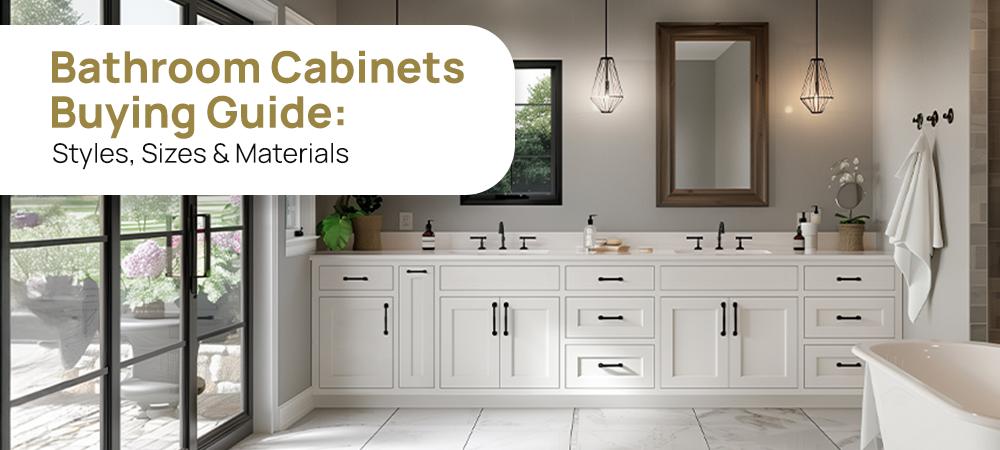
Bathroom Cabinets Buying Guide: Styles, Sizes & Materials
Summary:
This guide by ROC Cabinetry highlights how to choose the right bathroom cabinets by balancing:
Style
Size
Material durability
Moisture resistance
Plywood is recommended for cabinet boxes that are:
Strong
Moisture-resistant
MDF is ideal for cabinet doors that are:
Smooth
Painted doors
Sizing ranges from 24" to 72" wide. Upgrading features like soft-close drawers improve daily functionality.
Avoid common pitfalls by:
Measuring plumbing clearances first
Prioritizing moisture resistance over the lowest price
Running exhaust fans to protect your client’s investment
Evaluate available space, storage requirements, cabinet construction, material durability, moisture resistance, and design compatibility when recommending bathroom cabinets. This guide explores popular styles, sizes, construction materials, storage features, and more to help you assist clients.
Bathroom Cabinet Types
Vanity Cabinets
Bathroom vanities support the weight of the sink and offer storage underneath for toiletries, cleaning supplies, and other items.
Freestanding
Because they aren't attached to the wall, freestanding cabinets offer great flexibility and fit perfectly in traditional bathrooms.
Wall-Mounted
Increasingly popular in contemporary bathrooms, wall-mounted floating cabinets create a spacious, open look.
Linen
Linen cabinets provide tall, vertical storage for towels, toilet paper, cleaning supplies, and personal care products.
Medicine
Medicine cabinets offer convenient storage for essentials. Many feature mirrored doors, combining storage and functionality in one compact solution.
Corner
Corner cabinets maximize areas that might otherwise go unused. They're especially beneficial in small bathrooms where every inch of storage matters.
Trending Bathroom Cabinet Styles
Shaker
With simple, clean lines, Shaker cabinets offer a timeless and versatile design that effortlessly complements traditional, farmhouse, transitional, and modern bathrooms.
Flat Panel
Flat panel doors consist of a surrounding frame set around a flat, recessed center panel, giving them subtle dimension without the raised detailing of traditional designs. This framed construction distinguishes them from slab doors and makes flat panel a versatile choice for transitional and modern bathrooms.
Raised Panel
Raised panel doors feature decorative profiles that add depth and visual interest. These cabinets complement traditional and classic bathroom designs.
Slab
Slab cabinet doors are a single, flat piece of material with no surrounding frame, panel, or detailing of any kind. Unlike flat panel doors, slab doors have no frame at all, creating a completely smooth, unbroken surface. Their minimalist appearance pairs well with contemporary fixtures, floating vanities, and modern hardware.
Transitional
Transitional cabinetry blends traditional craftsmanship with contemporary simplicity. It remains one of the most requested options because it adapts easily to changing design trends.
Open Shelving & Cabinet Combo
Combining enclosed cabinets with open shelving has become super popular. Open shelves display decorative or frequently used items while cabinet bases hide them.
CTA – Shop Cabinet Collections
Standard Bathroom Cabinet Sizes
Cabinet Type | Common Width |
Single Vanity | 24", 30", 36", 42", 48" |
Double Vanity | 60", 72" |
Linen Cabinet | 15–24" |
Medicine Cabinet | 16–36" |
Best Bathroom Cabinet Materials
Solid Wood
The pros are premium appearance, excellent durability, and long lifespan. Cons associated with solid wood are higher cost and that they may expand or contract with humidity. The best applications for solid wood cabinets are luxury bathrooms and high-end custom projects.
Plywood
Valued for its strength and moisture resistance, plywood is a preferred material for quality cabinet boxes, offering excellent structural stability, strong screw-holding power, and long-term durability.
MDF
Medium-density fiberboard provides a smooth surface for painted cabinet doors. The benefits of MDF are smooth painted finish, affordable pricing, stable surface, and resistant to cracking.
Particle Board
Particle board remains an economical option for budget-conscious projects. It requires good ventilation and lower exposure to moisture.
Selecting the Right Finish
The cabinet finish influences aesthetics and long-term maintenance. Popular options are painted, wood, matte, satin, natural wood, dark, and light finishes. Selecting a finish designed for bathroom environments helps improve durability and simplifies cleaning over time.
Bathroom Storage
Popular bathroom storage features include soft-close drawers, tilt-out sink trays, built-in electrical outlets, deep storage drawers, adjustable shelving, and integrated laundry hampers. These upgrades help reduce clutter, improve accessibility, and create a cleaner, more organized vanity area.
How to Pick Bathroom Cabinets Based on Bathroom Sizes
Small
Consider floating cabinets, corner cabinets, light-colored finishes, and vertical storage. These options create a more open appearance while increasing usable storage.
Medium
Medium-sized bathrooms often have enough room for single vanity cabinets, linen cabinets, multiple drawer configurations, and a combination of open and closed storage. This layout balances functionality with design flexibility.
Large
Double vanities, tall storage cabinets, customized drawer organization, premium finishes, and decorative furniture-style cabinetry are popular. These additions create a highly organized and luxurious space.
Durability That Lasts
Exposed to constant humidity, steam, and frequent cleaning, bathroom cabinets rely on proper ventilation, moisture-resistant finishes, and quality construction to last. Combined with durable coatings, regular cleaning, and prompt leak repairs, these simple maintenance practices will preserve cabinet finishes.
Common Buying Mistakes
Choosing a cabinet style before taking measurements
Underestimating storage needs
Ignoring moisture resistance
Selecting low-quality construction
Forgetting plumbing clearance requirements
Overlooking long-term maintenance
Last Thoughts
Choosing the right bathroom cabinets comes down to balancing style with performance. By focusing on smart sizing, quality materials like plywood, and moisture-resistant finishes, distributors can deliver solutions that look stunning and stand the test of time.
FAQs
1.What is the best material for bathroom cabinets?
Plywood is widely considered the top choice.
2.What size bathroom cabinet is ideal?
The ideal dimensions depend entirely on your client's specific bathroom layout, traffic flow, and storage needs.
3.Are plywood bathroom cabinets better than MDF?
Plywood is better for the main cabinet boxes because it handles moisture well and holds screws tightly. MDF is excellent for painted doors because its smooth, grain-free surface creates a flawless finish.
4.Are Flat Panel and Slab cabinet doors the same style?
No. Flat panel doors have a frame surrounding a flat center panel, while slab doors are a single flat piece with no frame at all.
5.What bathroom cabinet style is most popular?
Shaker-style cabinets continue to lead the industry.