
How Humidity Affects Wood Cabinets: What Dealers & Contractors Should Know

Blog Summary:
Wood cabinets naturally expand and contract as humidity levels change, making proper storage, acclimation, and installation critical for long-term performance. By maintaining indoor humidity between 35% and 55%, installing cabinets only after HVAC systems are operational, and educating homeowners on moisture control, dealers and contractors can:
Reduce callbacks
Protect cabinet quality
Ensure lasting customer satisfaction
How Humidity Affects Wood Cabinets: What Dealers & Contractors Should Know
Wood cabinets are built to last, but it is still a natural material that responds to its environment. Seasonal humidity changes can cause cabinets to expand, contract, or shift slightly over time, making proper storage, installation, and homeowner education essential.
For cabinet dealers, contractors, and kitchen designers, understanding how humidity affects wood cabinets helps:
Reduce service calls
Improve installation quality
Set realistic expectations with customers
Whether you’re installing cabinetry in a humid coastal region or a dry inland climate, following best practices can protect cabinet performance for years to come.
Why Wood Reacts to Humidity
Wood is hygroscopic, meaning it naturally absorbs and releases moisture from the surrounding air. As indoor humidity rises, wood fibers absorb moisture and expand. When humidity drops, they release moisture and contract.
This movement is completely normal in wood cabinetry. Modern cabinet construction helps minimize these changes through engineered materials, quality finishes, and precise manufacturing. The amount of movement can vary based on relative humidity, temperature, wood species, cabinet construction, installation conditions, and indoor climate control.
Engineered materials
Quality finishes
Precise manufacturing
However, no wood product is entirely immune to environmental conditions. The amount of movement depends on several factors, including:
Relative humidity levels
Temperature fluctuations
Wood species
Cabinet construction
Installation conditions
Indoor climate control
Common Effects of High Humidity
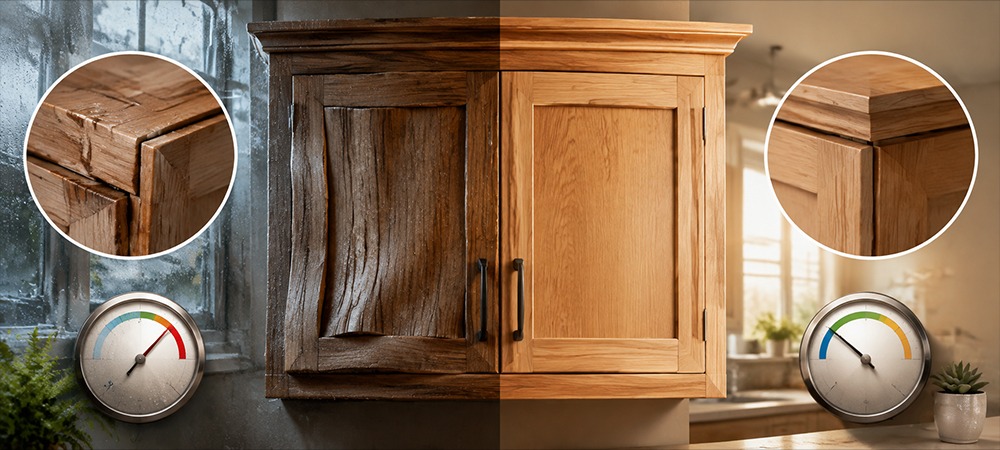
When cabinets are exposed to prolonged high humidity, dealers and installers may notice several changes.
Slight Door Expansion
Cabinet doors and drawer fronts may expand enough to reveal gaps slightly. This is usually temporary and often returns to normal as humidity levels stabilize.
Sticky Doors or Drawers
Wood movement can create tighter clearances, causing doors or drawers to feel less smooth during periods of elevated humidity.
Joint Movement
Painted wood cabinets occasionally develop small hairline cracks around joints. These are generally cosmetic and occur because the wood underneath naturally expands and contracts.
Finish Stress
Although today’s cabinet finishes are highly durable, excessive moisture can, over time, place additional stress on coatings, particularly in poorly ventilated environments.
What Happens in Low Humidity?
Dry conditions can cause wood cabinetry to contract slightly. This may result in:
Slightly larger gaps between doors
Minor shrinkage around joints
Small seasonal reveal changes
Temporary alignment differences
Again, these changes are considered normal characteristics of real wood cabinetry.
Areas Most at Risk
Some environments expose cabinetry to more dramatic humidity swings than others. These include:
Coastal homes
Lakefront properties
Vacation homes left without climate control
Newly constructed homes before HVAC systems are operational
Homes experiencing water leaks
Bathrooms with poor ventilation
Laundry rooms
Kitchens without adequate exhaust systems
Why Proper Storage Matters Before Installation
Many cabinet issues attributed to manufacturing actually originate before installation begins. Dealers should remind installers that cabinets should never be stored in:
Garages
Covered patios
Unconditioned warehouses
Damp basements
Job sites without climate control
Instead, cabinetry should remain inside conditioned spaces where temperature and humidity closely match the finished home’s living conditions.
Keeping cabinets in their original packaging until installation also helps protect them from rapid environmental changes.
The Importance of Acclimation
Proper acclimation after delivery is another important step before installation.
Store cabinets indoors.
Maintain normal living temperatures.
Allow sufficient time for the cabinetry to adjust to indoor conditions before installation begins.
This gives the wood time to stabilize, reducing unnecessary movement after installation.
Ideal Indoor Humidity for Wood Cabinets
Most cabinet manufacturers recommend maintaining indoor relative humidity between 35% and 55% throughout the year. Within this range, cabinets experience minimal seasonal movement while homeowners also enjoy a comfortable indoor environment.
During winter months, humidifiers may help prevent excessively dry conditions. During humid summers, air conditioning and dehumidifiers can help maintain consistent moisture levels. Installation Best Practices
Professional installation plays a significant role in long-term cabinet performance. Contractors should always:
Install cabinets only after HVAC systems are operational.
Confirm that drywall, flooring, and painting are complete.
Ensure that the construction team has completed all moisture-producing activities.
Level and shim cabinets properly.
Leave appropriate expansion tolerances where required.
Verify that you adjusted the doors and drawers after installation.
CTA – Explore Assembly Videos
Helping Homeowners Prevent Moisture Problems
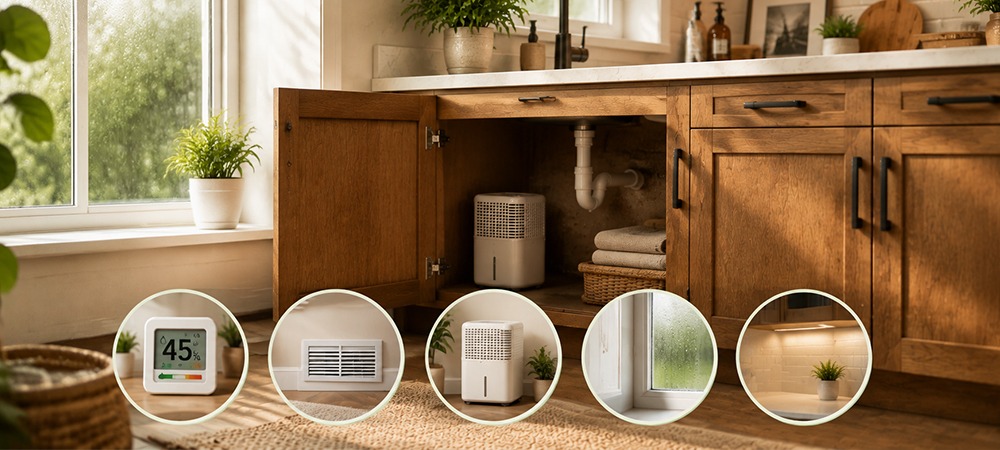
Dealers and designers can also educate homeowners on protecting their investment. Recommend that customers:
Run kitchen exhaust fans while cooking.
Repair plumbing leaks immediately.
Wipe standing water from cabinet surfaces.
Avoid hanging wet towels over cabinet doors.
Use bathroom ventilation fans.
Maintain consistent indoor temperatures throughout the year.
Keep indoor humidity within the recommended range.
Why Quality Construction Makes a Difference
While environmental changes cannot be eliminated, high-quality cabinet construction helps reduce their impact. Well-built cabinets feature:
Precision joinery
Durable finishes
Quality hardware
Engineered construction methods
At ROC Cabinetry, we combine quality craftsmanship with dependable construction to deliver cabinetry that meets the demands of everyday living. Proper installation, climate control, and routine maintenance allow dealers and contractors to deliver beautiful projects that continue performing long after installation.
Final Thoughts
Humidity is one of the few factors every wood cabinet will encounter throughout its lifetime. While expansion and contraction are natural, proper storage, acclimation, professional installation, and homeowner education can dramatically reduce unnecessary issues.
For cabinet dealers, builders, and contractors, understanding these principles helps set accurate customer expectations, minimize service callbacks, and support successful installations.
Accurate customer expectations
Minimize service callbacks
Ensure every installation performs as intended
By pairing quality cabinetry with proper environmental practices, professionals can deliver projects that remain beautiful and functional throughout every season.
CTA – Partner with ROC
FAQs
1.Can humidity permanently damage wood cabinets?
Prolonged exposure to excessive moisture, flooding, or water leaks can lead to permanent damage.
2.Is cabinet expansion considered a defect?
No, real wood cabinetry naturally shifts slightly with the seasons, and the industry expects this minor wood movement.
3.Should you install cabinets before you run the HVAC?
No, cabinets should be installed after the home HVAC system is operational, and interior conditions have stabilized whenever possible.